
Formation · Conversation
What Are Our Meetings Teaching Us?
What Is This For? · Conversation 5 of 6
By Matthew J. Skolnik
Before you gather: Please read the article and Scripture ahead of your meeting. Bring one observation or question to share. Give the conversation the time it needs, and return to it at a later meeting when helpful.
The article that inspired this series: What Is This For?
Formation goal: Change one repeated meeting practice so it strengthens shared discernment and ministry between meetings.
Scripture: Colossians 3:12–17. Additional reading: James 1:19–25.
Receive and remember
What did you learn about someone’s gifts last month? Did that encounter change an assumption about participation? Share only what the person permitted. Then notice one moment in a recent meeting when you felt able to listen or contribute. What made that possible?
Pray: Christ, let your word dwell among us. Shape the way we listen, remember, decide, and act, so that our common life bears witness to your peace. Amen.
Listen to Scripture
Read Colossians 3:12–17. Notice the identity with which the passage begins, the practices it commends, and the reach of its final instruction. Let the words address your life together before applying them to a meeting agenda.
Put On the New Ways
12Therefore, as God’s chosen ones—holy and beloved—clothe yourselves with compassion, kindness, humility, gentleness, and patience. 13Bear with one another and forgive each other; if anyone has a complaint against another, just as the Lord forgave you, so you also must forgive. 14And over all these, put on love, which binds everything together in completeness.
15And let the peace of Christ rule in your hearts, to which indeed you were called in one body. And be thankful. 16Let the word of Christ dwell in you richly; teach and admonish one another in all wisdom; with psalms, hymns, and spiritual songs, sing to God with gratitude in your hearts. 17And whatever you do, in word or deed, do everything in the name of the Lord Jesus, giving thanks to God the Father through him.
Notes
“chosen… holy… beloved” — Ethics flow from belovedness: these virtues are not self-improvement but fitting clothing for God’s people.
“bear with… forgive… as the Lord forgave” — Forgiveness is patterned on Christ: costly, initiative-taking, and relationally restorative.
“love… binds… in completeness” — Love is the integrating virtue; it holds the community together and matures everything else.
“peace… rule… one body” — Peace is an umpire for communal life, guiding decisions and conflicts toward unity rather than rivalry.
“word… dwell richly… teach… sing” — Formation is corporate and lyrical: wisdom is practiced through mutual instruction and sung theology.
“in the name… giving thanks” — The comprehensive frame is gratitude and representation: daily life is lived as Jesus’ authorized people.
Vocabulary
ἐκλεκτός (eklektos) — chosen; elect
χρηστότης (chrēstotēs) — kindness
ταπεινοφροσύνη (tapeinophrosynē) — humility
πραΰτης (prautēs) — gentleness; meekness
μακροθυμία (makrothymia) — patience; long-suffering
σπλάγχνα οἰκτιρμοῦ (splanchna oiktirmou)
“Compassion; tender mercy (lit. “inner parts”).”
ἀνέχομαι (anechomai) — to bear with; to endure
χαρίζομαι (charizomai) — to forgive; to give freely
σύνδεσμος (syndesmos) — bond; binding tie
τελειότης (teleiotēs) — completeness; maturity
βραβεύω (brabeuō) — to rule; to arbitrate (as an umpire)
εἰρήνη (eirēnē)
“Peace; wholeness.”
ἐνοικέω (enoikeō) — to dwell in
νουθετέω (noutheteō) — to admonish; to counsel
ψαλμός (psalmos) — psalm
ὕμνος (hymnos) — hymn
ᾠδή πνευματική (ōdē pneumatikē) — spiritual song
ὄνομα (onoma) — name (authority/representation)
Read the full chapter: Colossians 3.
The habits of our common life
Every meeting has a pattern. We begin in a familiar way, give attention to certain matters, hear from certain people, and decide when a topic has received enough time. Some patterns are written into an agenda; others are learned by watching. A new member quickly discovers whether questions are welcome, whether disagreement is tolerated, and whether the people who speak most confidently usually determine what happens.
These repeated actions form expectations. If a meeting consistently rushes through relationships and gives most of its energy to reports, members may learn that relationships are secondary. If the chair always rescues unfinished work, members may learn that a commitment is optional. If someone can admit uncertainty and receive thoughtful help, members may become more willing to ask for it. Our stated values and our recurring practices can teach different lessons.
Colossians begins its instruction by addressing people as chosen, holy, and beloved. Their life together grows from an identity they receive. Compassion, kindness, humility, gentleness, and patience become ways of inhabiting that life. Love binds the community together; Christ’s peace and word shape its common existence. Teaching, gratitude, song, speech, and action all belong within the passage’s vision.
The letter’s instruction to teach and admonish one another includes mutual responsibility. A community needs more than pleasant feelings. People help each other notice what is true and how to live faithfully. Humility changes the way correction is offered, and love keeps correction directed toward another’s good. The peace of Christ cannot simply mean that those with less influence must remain quiet so the meeting feels comfortable.
Forgiveness also requires care in its application. Bearing with ordinary differences does not require enduring abuse or abandoning accountability. A committee should not turn a formation exercise into an investigation of a serious allegation or pressure someone to reconcile. Appropriate protection and accountable processes remain necessary. The habits described here concern the ordinary common life through which people learn to act toward one another with truth and care.
We can speak of these habits as the everyday liturgies of a committee: the repeated patterns through which attention and action take shape. This is an analogy. It does not make approving minutes a sacrament or make every administrative routine an act of corporate worship. It invites us to ask what our repetition is teaching and whether it helps us live the faith we confess.
Minutes offer a useful place to begin. Their formal purpose includes an accurate record of what the body did. That task deserves care. After considering accuracy, a group can also look at one decision and remember its intended purpose. Whom was it meant to serve? What has happened since? What does that experience ask of us today? This brief reflection connects memory with present discernment.
Keep the two tasks distinct enough to protect the record. Approving minutes should not become an indirect way to reopen a decision or rewrite what occurred. New action belongs in the appropriate current business. Nor should private stories be inserted into official minutes to prove that ministry happened. The reflection may produce a simple follow-up, a question for the agenda, or a reason to give thanks.
A gathering on a summer back porch offers another image. A nominating chair recently chose that setting for a meeting. The change itself is a concrete act of hospitality worth noticing. We should not claim that it transformed the committee without asking those present. What did they experience? Did the setting help anyone listen, speak, or become better known? Their answers can help distinguish a meaningful practice from an attractive story about one.
The deeper question is what made room for relationship. Another group might find that room around a table at church, in an accessible community space, or through an online meeting with an unhurried opening. No one should feel required to host at home. Weather, mobility, travel, technology, and caregiving can affect access. Hospitality asks whether people can participate and be received with care, not whether the setting looks a particular way.
Meetings can themselves be ministry. Prayer, mutual care, discernment, and responsible decisions matter. Yet a team can spend all its energy organizing ministry without making space for ministry between gatherings. A discussion about listening needs an opportunity to listen. A decision about leadership needs relationships through which people become known and supported. An approved plan needs willing people, resources, and a return point.
This is why an ending matters as much as an opening. Before leaving, ask what the decision makes possible, who has agreed to act, what support is available, and when the group will learn from the result. An honest lack of capacity belongs in that conversation. It may lead to narrowing the action or seeking a partner. Silence should never be mistaken for someone’s agreement to carry the work.
You do not need to redesign every meeting at once. Choose one repeated action that could help the group practice what it believes. Make enough room to repeat it, learn from it, and adjust it. Over time, the meeting can become a dependable place where the community remembers its purpose and prepares to live that purpose beyond the table.
Notice, examine, and discern
- Notice: What quality or practice in Colossians draws your attention? Looking at a recent agenda or set of minutes, what repeatedly receives our time, and what is easily hurried past?
- Examine: What might a new member learn from our actual pattern? Who can speak, question, and influence a decision? Where does the pattern support or undermine our stated purpose?
- Discern: What one repeated practice would help us connect memory, relationship, and action? How could it shape one real item on today’s agenda and one commitment beyond the meeting?
Invite observations from newer or quieter members without putting them on the spot. Evaluate a pattern together rather than grading the chair. Leave room for someone to describe the same practice differently.
Practice during the month
Choose one change and use it now. After approving minutes, you might reflect on one previous decision and what has been learned, invite a brief round before debating a recommendation, or end a decision with an explicit agreement about follow-through. Choose the practice that fits your group’s need rather than attempting all three.
Make room for it by shortening or removing something discretionary. Name who will help it happen so that it does not depend only on the chair. Preserve necessary procedural and confidentiality requirements. The point is to change attention within responsible governance, not to bypass it.
Connect the new practice to one action during the month, preferably work already agreed in this series. Someone might check how a changed process is affecting people or confirm that a ministry partner has what they need. Record consent, support, and a return date. At your next meeting, repeat the meeting practice before deciding whether it is useful.
Return and celebrate
Ask: What did the changed pattern help us notice or do, and whose participation changed? Celebrate a specific act of listening, hospitality, or shared responsibility. If the change crowded out necessary work or introduced a barrier, adjust it. The final conversation will gather what you have learned and discern what to sustain.
Closing prayer
God of our words and deeds, let the peace of Christ shape our common life. Help us remember truthfully, listen generously, decide responsibly, and carry our commitments into the days between meetings. Amen.
Sources and further reading
- Colossians 3:12–17: received identity, mutual formation, peace, gratitude, and action in Christ’s name.
- James 1:19–25: listening and putting the word into practice.
- The term everyday liturgies is this series’ analogy for recurring formative habits; it does not assign sacramental status to committee procedures.
- The back-porch example comes from Matthew J. Skolnik’s account of a nominating chair’s summer gathering. No claim is made about participants’ experience without their testimony.
- For further reflection: Matthew J. Skolnik, We Become What We Practice; and the collection’s companion, Holding the Conversation and Sustaining the Practice.
Acknowledgment
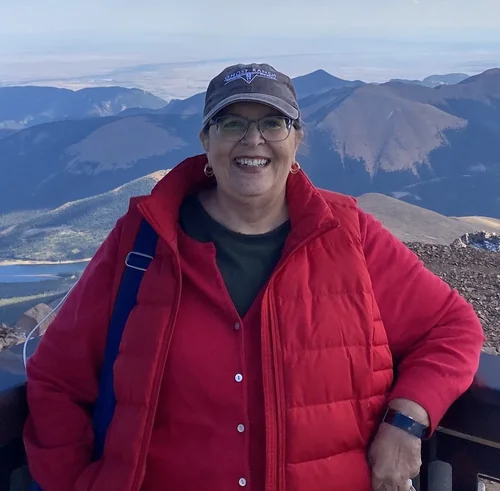
Stated Clerk

Associate for Justice Ministries

Presbytery Operations Manager
This article and its conversation were influenced by the wisdom shared by the Presbytery of the Western Reserve (PWR) staff in September 2026: Judy Mitchell, Stated Clerk; Laura VanDale, Associate for Justice Ministries; and Josh Daum, Presbytery Operations Manager. With gratitude for their insight, questions, and ministry alongside Matthew J. Skolnik, the author of this collection.
© 2026 Matthew J. Skolnik. Scripture excerpts retain their separate attribution and license.
Keep exploring
More from this series
Scripture and Sources
Read the biblical passages in context and explore the theological sources that inform the collection.
Open resource →Start Here: What Is This For?
Begin here for the monthly rhythm, preparation, and one practice carried through the six conversations.
Open resource →What Is Our Work For?
Connect one ordinary responsibility with the people it serves and the fruit you hope it will bear in Christ's ministry.
Open resource →