Formation · Conversation
Watch with Hope
Turn from prediction toward faithful attention
Watch and Wait: Advent 2026 · Conversation 1 of 5
Use this with worship. This conversation accompanies
Watch with Hope, the worship resource
for November 29.
Movement 1 of 5 · Attend. Advent formation begins by turning from prediction toward attention. We remember God’s faithfulness so that we can recognize newness, not force the future to resemble the past.
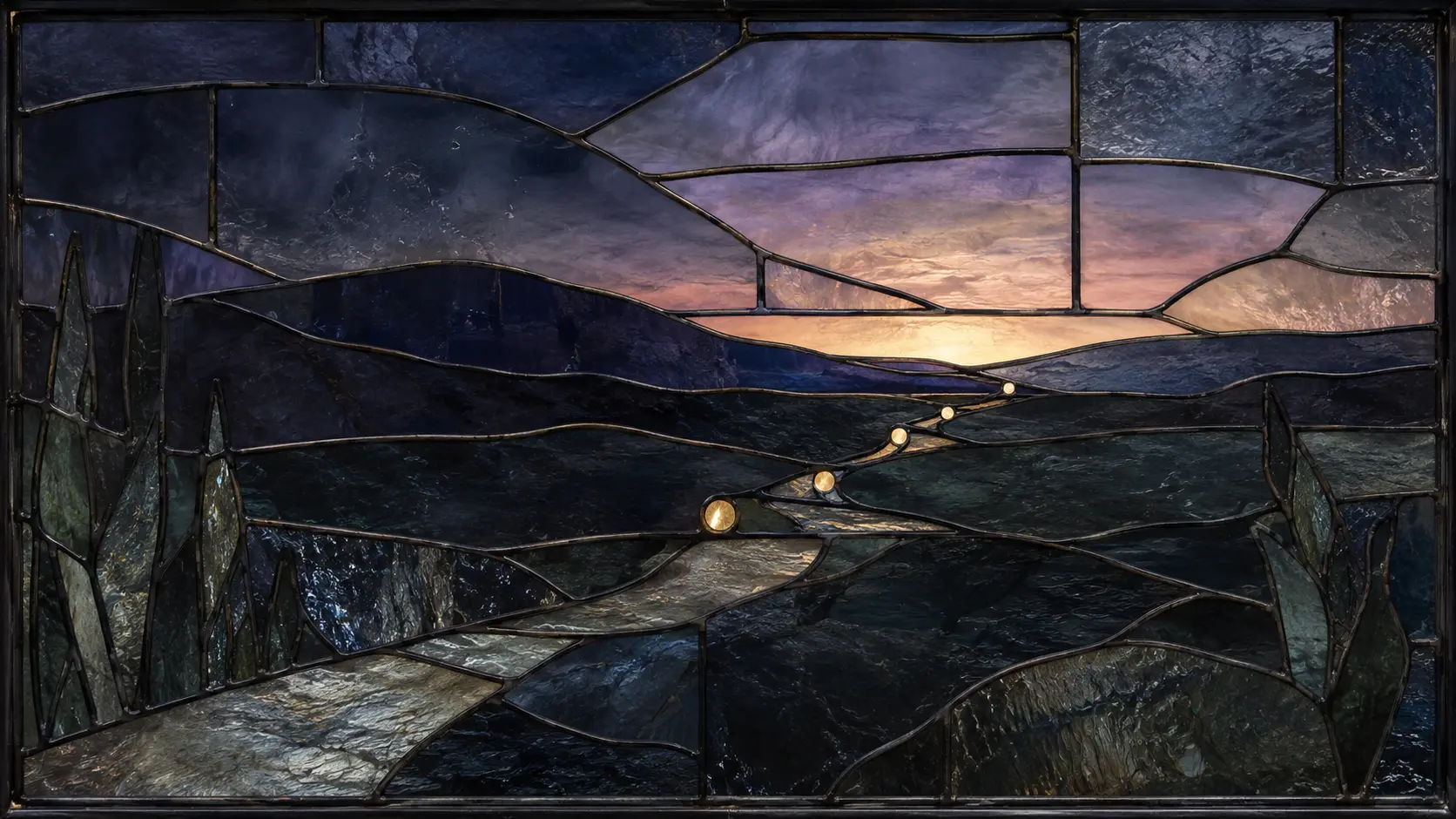
Hope watches for a way
Settle in a way that helps you attend. Name silently one thing you hope for and one uncertainty you cannot resolve. You do not need to find a hopeful feeling. Read Isaiah 43:16–21 slowly, then hear it again. Choose a word or image that stays with you, including one you resist. Let it accompany your uncertainty before interpreting it.
16This is what LORD says—he who makes a way through the sea, a path through the mighty waters, 17who brings out the chariot and horse, the army and the warrior together, they lie down, they cannot rise, they are extinguished, quenched like a wick: 18"Forget the former things; do not dwell on the past. 19See, I am doing a new thing! Now it springs up; do you not perceive it? I am making a way in the wilderness and streams in the wasteland. 20The wild animals honor me, the jackals and the owls, because I provide water in the wilderness and streams in the wasteland, to give drink to my chosen people, 21the people I formed for myself that they may proclaim my praise.
Explore this passage
Choose reading help independently from the Bible translation. A companion may be designed alongside one translation, but you may use it while reading either one.
Read without added material
The translation, passage, and reading help are separate choices. You can return here whenever you want more context.
Isaiah 43:16-21
Remembering God Without Controlling the Future
Content note
exile, displacement, and institutional change
First Look
The prophet recalls God’s way through the sea and announces a new way through wilderness. A displaced people are invited to perceive life already springing forth.
Look Closely
‘Do not remember’ cannot mean erasing the exodus, because the poem has just narrated it. Memory identifies the liberating God without requiring liberation to repeat one familiar form. Wilderness and rivers speak to communal return, not generic novelty.
Power and Consequences
Leaders should not label a preferred innovation ‘the new thing’ or demand that people in grief perceive it as hope. Claims of newness need testing by God’s liberating character and by their consequences for displaced and vulnerable people.
Consider Together
- What does the remembered exodus establish about God?
- How can memory become testimony rather than blueprint?
- Who experiences the proposed new thing as water in the desert?
Sources and Further Study
- Read Isaiah 40-55 and Exodus 14-15.
- Sefaria: https://www.sefaria.org/Isaiah.43
- STEP Bible: https://www.stepbible.org/?q=reference=Isaiah.43.16-21
- NET Bible notes: https://classic.net.bible.org/passage.php?passage=Isaiah+43%3A16-21
Hear hope from exile
Isaiah 43 speaks to people whose public world has been shattered by
conquest and displacement. The “wilderness” is not a picturesque retreat,
and the “new thing” is not a slogan for organizational innovation. It is a
promise addressed to people who cannot restore themselves: the God who
made a way through the sea has not exhausted God’s saving freedom.
The command not to remember former things does not erase Israel’s story.
The passage itself remembers the exodus in detail. Rather, the people are
released from demanding that rescue take the same form twice. Memory names
who God is; it does not prescribe how God must act next.
That distinction protects an Advent community from two errors. Nostalgia
can confuse a beloved season with God’s only faithful future. Novelty can
call every new idea the work of the Spirit. Christian hope does neither.
It attends to what is actually emerging and tests it by the character of
the God known in Scripture—liberating, life-giving, truthful, and faithful
to people who thirst.
Attend before interpreting
In anxious seasons, leaders often move from observation to explanation
too quickly. A smaller gathering becomes “decline.” A new voice becomes
“the future.” A conflict becomes “resistance to change.” Advent attention
slows that reflex. It separates what we can see from the story we have
attached to it.
Practice saying, “I notice…” before “This means…” Hope does not refuse
interpretation; it makes interpretation more honest. It allows several
signs to accumulate, listens to people who experience them differently,
and remains open to correction.
If loss, illness, or exhaustion leaves you unable to see anything beginning, you belong here. You may name what is difficult, remain quiet, or ask someone to hold hope with you. The practice is attention, not producing evidence that you feel better.
Talk together
Choose one or two questions to stay with. Begin with a particular experience rather than a general answer. Listen without correcting or rushing to a solution; speaking, writing, and passing are all welcome. Leave time for the practice that follows.
- Which story of God’s faithfulness does this community most need to
remember? - When does remembering strengthen hope, and when can it prevent us
from perceiving something new? - Where does our community feel most like wilderness or desert
now? - What small sign of life might we overlook because it does not
resemble our expectations? - What would it mean to watch faithfully without demanding
certainty?
Practice: keep a watch list
Begin the watch list now. Create two columns titled “What we fear is ending” and “What may be beginning.” Choose one ordinary observation, even if its meaning is unclear, and place it where it seems to belong. Beside it, distinguish what you saw from what you think it means. You may leave either column empty. During the week, add an observation when you can.
When the group gathers again, ask which observations created
gratitude, resistance, or curiosity. Hope often begins as attention
before it becomes confidence.
For each item in “What may be beginning,” add two questions: “Who is
experiencing this as good news?” and “What evidence would help us test this
interpretation?” Leave room for an honest “We do not yet know.”
Sources and further reading
- Isaiah 40–55, the wider scriptural setting for comfort and return.
- Romans 8:18–27, on hope, groaning, and the Spirit’s intercession.
- Fleming Rutledge, Advent: The Once and Future Coming of Jesus
Christ, on Advent hope amid darkness.
Carry it forward
Keep the watch list where you will see it each day. Bring one observation—not a conclusion—to the next gathering. The next movement will make enough room to hear what hurried attention still misses.
Pray
God who makes a way where none is visible, keep us awake to your
presence. Free us from nostalgia without gratitude and novelty without
wisdom. Teach us to watch with hope for the life you are bringing near.
Amen.
Keep exploring
More from this series
Watch for Joy
Let spacious listening sharpen recognition of Christ’s restoring work and make honest joy possible.
Open resource →Watch for the Unexpected
Move from recognition to receptivity by welcoming honest questions, surprising witnesses, and a future we did not design.
Open resource →Watch and Welcome
Complete the arc as received grace becomes room for Christ, shared authority, and good news carried outward.
Open resource →