Formation · Conversation
Generosity Born from Grace
Let grace, not pressure, open our hands
Generosity that Transforms · Conversation 2 of 4
Use this with worship. This conversation accompanies
Generosity Born from Grace,
the November 8 worship resource.
Movement 2 of 4 · Respond. Having named what God has entrusted, we now practice response. Grace comes first; generosity is what becomes possible when a community receives that grace together.
Grace comes before the gift
Return to one gift you noticed last week and, if you asked a neighbor about it, what you heard. Take a breath before turning gratitude into a task. Read 2 Corinthians 8:1–15 slowly. Which phrase invites a free response, and which makes you feel pressure? Hold both reactions honestly as you listen.
The Grace of Giving
1We make known to you, brothers and sisters, the grace of God that has been given among the churches of Macedonia, 2that in a severe testing of affliction, the abundance of their joy and their extreme poverty overflowed in the wealth of their generosity.
3For according to their means, I can testify, and beyond their means, they gave of their own accord, 4begging us earnestly for the favor of participating in the ministry to the holy ones, 5and this not as we expected, but they gave themselves first to the Lord and then to us by the will of God.
6So we urged Titus that as he had begun, so he should also complete among you this gracious work. 7But as you abound in everything—in faith, in speech, in knowledge, in all earnestness, and in the love we have awakened in you—see that you abound in this gracious work also.
The Example of Christ
8I say this not as a command, but to test the genuineness of your love by the earnestness of others. 9For you know the grace of our Lord Jesus Christ, that though he was rich, yet for your sake he became poor, so that you by his poverty might become rich.
10And in this matter I give my judgment: this benefits you, who a year ago began not only to do this but also to desire it. 11So now complete the doing of it, so that your readiness in desiring it may be matched by completion according to what you have.
12For if the readiness is present, it is acceptable according to what one has, not according to what one does not have. 13For I do not mean that others should be relieved and you burdened, 14but that there may be equality. At the present time your abundance meets their need, so that their abundance may also meet your need, that there may be equality.
15As it is written,
“The one who gathered much had nothing left over,
and the one who gathered little had no lack.”
Notes
“Grace” frames generosity. Giving is not reduced to obligation but described as divine activity within the community.
Affliction and poverty are not removed; they become the context in which generosity emerges.
The Macedonians’ giving exceeds expectation both in amount and in willingness. Their self-giving precedes material giving.
Participation in giving is described as a “favor,” reversing normal assumptions about burden and privilege.
The Corinthians are urged to align this act of giving with their existing strengths, not treat it as separate.
Paul avoids command, framing the appeal as a test of authenticity rather than compliance.
Christ’s “poverty” and “richness” are stated relationally. The movement from one to the other is not explained but presented as pattern.
Desire and action are held together. Incomplete intention is not dismissed but brought toward completion.
Acceptability is measured by proportion, not comparison. Capacity governs expectation.
Equality is situational and reciprocal. Present abundance and need are expected to shift over time.
The citation from the wilderness narrative reframes provision as shared sufficiency rather than accumulation.
Vocabulary
χάρις (charis)
“Grace.” Here functioning as divine enablement expressed in generosity.
δοκιμή (dokimē)
“Testing.” A proving or refining circumstance.
πλοῦτος (ploutos)
“Wealth.” Used paradoxically of generosity arising from poverty.
κοινωνία (koinōnia)
“Participation” or “sharing.” Emphasizes relational involvement.
σπουδή (spoudē)
“Earnestness.” Diligent seriousness or eagerness.
πτωχεύω (ptōcheuō)
“To become poor.” Indicates entering into a condition, not merely lacking resources.
ἄνεσις (anesis)
“Relief.” Release from burden.
ἰσότης (isotēs)
“Equality.” Fairness or balance rather than sameness.
χάρις (charis)
“Grace.” Here functioning as divine enablement expressed in generosity.
δοκιμή (dokimē)
“Testing.” A proving or refining circumstance.
πλοῦτος (ploutos)
“Wealth.” Used paradoxically of generosity arising from poverty.
κοινωνία (koinōnia)
“Participation” or “sharing.” Marks relational involvement.
Explore this passage
Choose reading help independently from the Bible translation. A companion may be designed alongside one translation, but you may use it while reading either one.
Read without added material
The translation, passage, and reading help are separate choices. You can return here whenever you want more context.
2 Corinthians 8:1-15
Grace, Willingness, and Fair Balance
Content note
poverty, fundraising pressure, and financial disclosure
First Look
Paul encourages completion of a collection for believers in Jerusalem. He names Macedonian generosity, Christ’s self-giving, willingness, need, abundance, and fair balance.
Look Closely
Paul calls the gift a grace and says he is not issuing a command. Acceptance is according to what one has, not what one lacks. The manna citation imagines abundance meeting need rather than equal gift amounts.
Power and Consequences
Paul’s rhetoric is urgent and comparative, so contemporary leaders must take special care not to weaponize his example. A grace-shaped appeal protects privacy, explains purpose and oversight, welcomes nonfinancial participation, and leaves room for a faithful no.
Consider Together
- How does Christ’s grace precede the request?
- What is the difference between equality and fair balance?
- Which practices keep invitation from becoming coercion?
Sources and Further Study
- Read 2 Corinthians 8-9 and Romans 15:25-32.
- SBL Greek New Testament: https://github.com/LogosBible/SBLGNT
- STEP Bible: https://www.stepbible.org/?q=reference=2Corinthians.8.1-15
- NET Bible notes: https://classic.net.bible.org/passage.php?passage=2+Corinthians+8%3A1-15
That order matters. Christian generosity is not a fee paid to remain
in good standing with God. It is a response to the self-giving life of
Jesus Christ. We do not give so that grace will arrive; grace has
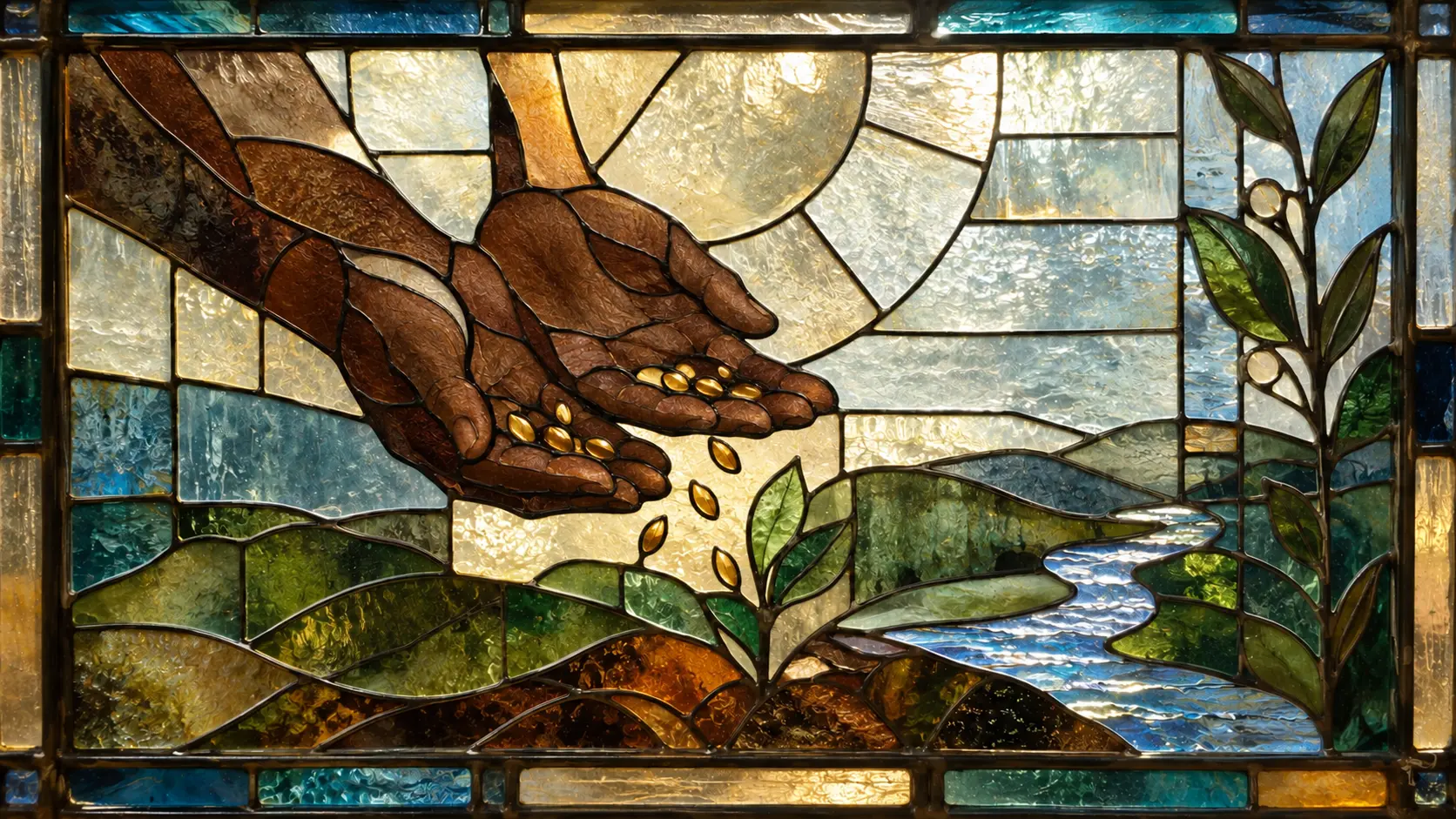
arrived, and therefore our hands can open.
A collection across difference
Second Corinthians 8 belongs to Paul’s long effort to gather a
collection for impoverished believers in Jerusalem. The gift joins
communities separated by geography, culture, and contested relationships.
It is relief for people in need, but it is also a sign that Gentile and
Jewish believers belong to one another in Christ. Generosity here is not a
private virtue. It repairs distance within the body of Christ.
Paul speaks with urgency and uses the Macedonians as an example, but he
also says that he is not issuing a command. The gift is acceptable
according to what a person has, not according to what a person does not
have. His image is not endless sacrifice by those already burdened; it is
fair balance—abundance meeting need so that the whole community may live.
That distinction matters whenever churches speak about money.
Invite response without manufacturing it
Fundraising can imitate grace-language while relying on pressure:
publicly ranking gifts, implying that faithful people will give beyond
their means, promising spiritual return, or making belonging depend on
financial participation. Such methods may raise money while deforming the
community. A gift extracted through shame is not the same as a response
made free by grace.
A grace-shaped invitation tells the truth about need and purpose,
explains how decisions will be made, protects confidentiality, welcomes
nonfinancial gifts, and leaves room for a faithful no. It also asks the
institution to practice the generosity it commends. Leaders should be able
to say what the church will share, change, or release—not only what it asks
members to provide.
Your belonging does not depend on your financial capacity. Keep income, debt, and giving amounts private. You may share a story, listen, offer a nonfinancial gift, or pass without explaining your circumstances.
Talk together
Choose one or two questions to stay with. Begin with a particular experience rather than a general answer. Listen without correcting or rushing to a solution; speaking, writing, and passing are all welcome. Leave time for the practice that follows.
- What emotions usually accompany conversations about giving in our
church—joy, gratitude, fear, guilt, fatigue, hope, or something
else? - Where have you received generosity that you did not earn or
expect? - How does beginning with grace change the way we speak about
financial need? - Paul connects generosity with fairness. What inequities or unmet
needs should our giving help address? - What would help every person participate meaningfully without
comparing the size of gifts?
Practice: tell one grace
story
If you wish, complete this sentence: “Because someone gave freely, I was able to…” You may speak, write, or pass. Receive each story without evaluating its size or spiritual significance. Afterward, sit with one gift you did not have to earn. What response is becoming possible?
During the coming week, offer one gift of time, attention,
encouragement, skill, or money without seeking recognition. Notice
whether the gift feels different when understood as a response to grace
rather than an obligation.
If shaping an appeal is part of your responsibility, you can practice the same movement there: name the grace received, the need, and the good a gift could make possible. Remove words that trade on fear, shame, or competition. This is an alternative application of the practice, not an additional assignment for everyone.
Sources and further reading
- 2 Corinthians 8–9, read as the full context of the collection.
- Presbyterian Church (U.S.A.), Book of Order, F-1.0301, on the
church as the body of Christ. - Henri J. M. Nouwen, A Spirituality of Fundraising, on
fundraising as invitation into mission and relationship.
Carry it forward
Carry the one gift of time, attention, skill, encouragement, or money you chose into the week. After offering it, notice what happened in you and, where you can know, how it was received. Bring one observation next time. If you worked on an appeal instead, bring what changed in its language. The next movement will meet the fear that can close our hands even after grace is named.
Pray
God of overflowing grace, you give yourself to us before we know how
to respond. Loosen fear, comparison, and shame. Form in us the joy of
Christ, so that what we have received becomes life for our neighbors.
Amen.
Keep exploring
More from this series
Beyond the Building
Begin with God’s abundance and recognize property, money, time, and relationships as gifts entrusted for participation in shalom.
Open resource →Trust Over Fear
Move from response to release by naming scarcity honestly and choosing a bounded, accountable act of trust.
Open resource →Building a Legacy of Generosity
Complete the arc by entrusting resources and real authority so generous habits become a shared future rather than a protected inheritance.
Open resource →